Earth Day Essentials

“Smell is a potent wizard that transports us across thousands of miles and all the years we have lived” – Helen Keller

Each year on the 22nd of April, nearly a billion people spanning 192 countries participate in some form of Earth Day event.   What started in 1970 as a modern environmental movement with 20 million people has multiplied into mass activism.

This year’s theme: Environmental and Climate Change Literacy.    According to Earthday.org, the world’s largest environmental advocacy group, the mission is simple:  To diversify, educate, and activate the environmental movement worldwide.

In honor of Earth Day, we will explore the wonders of volatile aromatic compounds, also known as essential oils.

What is an Essential Oil?

By definition, essential oils are the volatile liquids (aromatic compounds) distilled from plants including the seeds, bark, leaves, stems, roots, flowers, and fruits.   Science estimates there are currently over 390,000 plant species in the world.  Of this vast number of plant species, an estimated 10 percent of these plants are oil-producing.

History provides accounts of essential oil use for beautification and purification dating back to the Egyptians.  Accounts show that King Tutankhamen’s tomb included 35 alabaster jars for essential oils.   Biblical accounts show that Frankincense and Myrrh were given to the Christ child.  Even Hippocrates, the Father of Medicine, was sited for his belief in using plants as medicine.

As a doTERRA Wellness Advocate, I have the privilege of educating people all around the world on the numerous health and wellness benefits that stem from the use of Certified Pure Therapeutic Grade (CPTG) essential oils.   It is important to note that not all essential oils are created equally.   Because of doTERRA’s rigorous third-party testing, they ensure the highest levels of purity and potency.  This is very important when it comes to using essential oils internally.  Let’s explore a little further how to use these miracles of nature!

 Essential Oils Usage

Aromatic

Some essential oils induce uplifting or invigorating effects, while others are more calming. Diffusion is one of the simplest methods for using essential oils aromatically. You can achieve the same health benefits by simply placing a few drops of essential oil in the palm of your hand that is then cupped around the nose as you breathe deeply.

  • Apply oil to a cotton ball and place in the air vents of your vehicle
  • Mix oils in a spray bottle with water and mist over furniture, carpet, or linens
  • Add oil to a batch of laundry or to dryer sheets
  • Use in household surface cleaners (try this 10 day challenge)

Topical

Topical application is a very effective method for applying essential oils. Because essential oils have low molecular weights and are lipid soluble, they easily penetrate the skin. Once absorbed, they stay in the applied area for a localized benefit.

To decrease the likelihood of developing a skin sensitivity, especially on young or sensitive skin, it is advisable to use a carrier oil (such as Fractionated Coconut Oil) to dilute more potent oils and when trying an oil for the first time. The recommend dilution ratio is typically one drop of essential oil to three drops of carrier oil.

Other Effective Methods of Topical Application 

  • Add a few drops of oil to a warm bath
  • Make a hot or cold compress by soaking a towel or cloth in water, adding essential oils, and then applying to the desired area
  • Add oil to a lotion or moisturizer and then apply to skin

Internal

Certain essential oils have a rich culinary history and can be used as dietary supplements supporting a variety of healthy conditions. When you sprinkle cinnamon on your oatmeal, sip a mug of peppermint tea, or add fresh basil leaves to your spaghetti, you are actually consuming some volatile aromatic essential oil compounds.

Essential oil contributes many health benefits as well as flavoring and aroma properties to foods. When in their concentrated form, essential oils can be used as dietary supplements for more targeted and potent health benefits. Internal use is a very safe and effective method of application because of the sophisticated physiologic processes of our bodies.

When ingested, essential oils directly enter the blood stream via the gastrointestinal tract, where they are transported throughout the rest of the body. Essential oils are lipid soluble so they are readily transported to all organs of the body, including the brain. Then, like all things we consume, essential oils are metabolized by the liver and other organs and are then excreted.

Effective Methods of Internal Application

  • Use oils in recipes for cooking or baking to replace fresh or dried herbs and spices
  • Remember that essential oils are much more potent than dried or fresh herbs and spices, so start with a very small amount
  • For more potent oils, it may be better to administer them by toothpicks (dip the end of a clean toothpick into the oil and then add to the food) rather than drops
  • Add essential oils to water, smoothies, milk, tea, or other drinks
  • Take essential oils internally in a veggie capsule or add to a small amount of applesauce or yogurt

What are the benefits of using doTERRA essential oils?

The benefits of using Certified Pure Therapeutic Grade (CPTG) essential oils include:

  • Physical– doTERRA essential oils boast a wealth of physical health benefits including respiratory and immune support, stress and tension relief, as well as aiding in restful sleep.  They promote feelings of well-being and balanced mood,  aid in digestion and metabolism, and support increased cellular function.  They help increase positive feelings, improve the appearance of the skin, and help protect against environmental and seasonal threats.
  • Emotional- Using essential oils can be overwhelmingly therapeutic in nature, especially when it comes to healing emotions.   Whether you are holding on to unresolved feelings, past trauma, or any number of negative emotions, essential oils help support the healing process by releasing limiting beliefs and helping mend a broken heart.
  • Spiritual– Using essential oils is often a profound experience.  Not only do they support you on a physical and emotional level, but they help establish a soul connection.   There is a unique mystery about the use of essential oils, dating back to the earliest of civilizations.  How profound to have this community with nature and experience peaceful and tranquil feelings.  Essential oils help increase our spiritual awareness, and inspire us to connect with our life’s true purpose.

There are a vast number of reasons for exploring the world of essential oils.    I made a personal decision to explore alternative ways of coping with anxiety which has been my companion since age 18.   I will never forget the first time I used lavender essential oil.  I recall specifically the impact it had on my nervous system, and it planted a seed that would one day grow into a profound passion.

We will take a look at specific oils and their health benefits in future posts, so if there is a particular oils you would like to explore, please leave a note in the comments. Additionally, if you have doTERRA oils you love using, share a tip with all of us!  To experience the benefits of Certified Pure Therapeutic Grade essential oils  learn more about the StandinLove community here.    I would love to support you on your health and wellness journey!

Happy Earth Day and cheers to Abundant Health

Jennifer Miller is a Las Vegas based writer, DoTERRA wellness advocate, and BeadforLife community partner and is the founder of Stand In Love.org  -a platform for sharing her core values:
Serving People | Inspiring Ideas | Living Your Purpose


4 C’s of Humans: Diamonds in the Rough

Diamond in the Rough: “Someone (or something) that has hidden exceptional characteristics and/or future potential, but currently lacks the final touches that would make them (or it) truly stand out from the crowd.” – The Urban Dictionary

Diamonds.

The esteemed birthstone of April.

Unequaled.  Enigmatic.  Energetic.

Diamond History

The oldest diamonds date back 3 billion years.  These mini miracles have been gifted for centuries to share love stories, symbolize milestones, and serve as protection during ancient times of battle.   Diamond, adapted from the Greek word “adamas” (or invincible) suggests these carbon crystals are more than just sparkle and shine.    Diamonds are formed miles beneath the Earth’s surface under the perfect storm of intense heat and pressure and reach land by volcanic activity.   Not only are diamonds symbols of love, commitment, and honor, they also create tremendous opportunity and impact via ethical consumption.

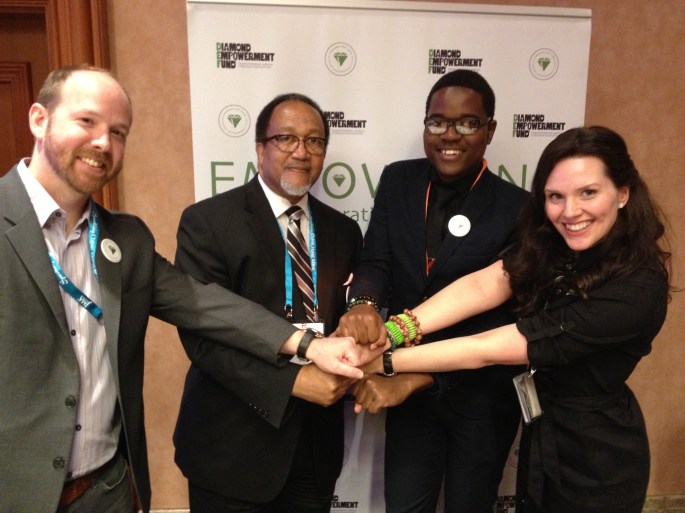
According to research, an estimated 10 million people globally are supported by the diamond industry.  During my 10 year journey in the diamond industry with MJ Christensen, I witnessed firsthand the unyielding power of these crystalline structures as well as the importance of increasing consumer confidence about their consumption.   As an advocate for global nonprofits  Diamond Empowerment Fund and the Diamond Development Initiative the goal was to connect consumers directly to their large scale missions centered on creating sustainable opportunities for the people in diamond producing nations like South Africa, Botswana, and the Democratic Republic of Congo.   It is through this increased awareness that understanding and collaboration have the opportuntiy to thrive.

DiamondEmpowermentFund.jpg
With civil rights leader and Diamond Empowerment Fund co-founder Dr. Benjamin Chavis.           (from left: Rusty Miller, Dr. Chavis, Biggie Tiggane, Jennifer Miller)


The 4 C’s of humans: “Diamonds in the Rough”

Polished diamonds are graded on a system known as the 4 C’s: Color, Clarity, Carat Weight, and Cut.  Cut being the most valuable, as it speaks to the personality of the diamond… the way it radiates light and releases its inner charm.

Humans are like diamonds in many ways.  Each uniquely fashioned, complete with identifying traits, in a variety of shapes and sizes, brimming with extraordinary potential.  Humans, like diamonds, begin with essential chemistry, and with loving intention over time,  have the capacity to transform into higher levels of radiant beauty.

Let’s explore what I refer to as the 4 C’s of Humans: Diamonds in the Rough to celebrate humanity during the month of April!

First C: Complex

Like a musical masterpiece, we are cleverly composed one note at at time, each note intentional.  Every vibration and every frequency singing a different song.   It is this richness, this depth that makes us incredibly interesting!  We are:

  • distinctive
  • vivid
  • vibrant
  • variegated

Second C: Communal

Not only are we a diverse group of human beings, we are also designed to commune with one another.  A quote taken from The Love Dare shares,  “Joined together, you are greater than your independent parts.  You need each other.  You complete each other.”   While this particular reference concerns a married couple, the underlying premise is applicable to friendships, and relationships of every kind.  It is a deep human need to be an integral part of a community, rather than exist in isolation.   We experience increased health and harmony when we realize we are:

  • truly connected to one another
  • joined through a common good
  • linked through loving kindness
  • united in soul and spirit

Third C: Capable

As a diamond in the rough is to a master craftsman, is a human in the eyes of our Creator.   We have been given individual capacity, as well as the ability to help others achieve their very best.   Sometimes, we discover our skills and purpose on our own, and other times, we benefit from a mentor who sees our limitless potential locked inside awaiting release.   Either way, trust that we are:

  • predisposed to an amazing life
  • gifted in countless ways
  • talented in specific areas
  • qualified to share our unique talents with the world!

Fourth C: Called 

When was the first time or last time someone made you feel that your life doesn’t matter?  Have you ever felt like what you say, think, feel, or do does not matter? Let’s get the record straight:   YOU matter.   There are over 7 billion people on the planet, and every single life matters, including yours.  Do not let this world tell you otherwise.   Know that you were created ON purpose, and FOR a purpose, to make a difference in this world.   For more tips on how to discover your calling, consider reading Rick Warren’s The Purpose Driven Life.  You will be delighted to know that you are:

  • appointed to do great works
  • designed to follow a path to your specific destiny
  • invited on a journey of love and joy
  • summoned to a thriving life, one worth living!

How do you measure treasures in this life?

Matthew 6:21 encourages us, ” For where your treasure is,  there your heart will be also.” 


Jennifer Miller is a Las Vegas based writer, DoTERRA wellness advocate, and BeadforLife community partner and is the founder of Stand In Love.org  -a platform for sharing her core values:
Serving People | Inspiring Ideas | Living Your Purpose


What No One Tells You About Habits

“Maintaining constant high motivation is unsustainable, but if things are easy to do even when motivation is low, they are more likely to succeed. ” – BJ Fogg, PhD.  

While in Salt Lake City last weekend, I toured the famed Temple Square, as well as the architecturally appealing public library where exposed glass elevators and unique art installations added intrigue and emotion to a book-exploring expedition.   Thanks to a chain of serendipitous events I arrived in Salt Lake City eager to connect with Leah Barker the CEO of global poverty eradication nonprofit Choice Humanitarian and to train with  Linda Fogg-Phillips, M.S. Health Promotion and Exercise Physiology.  Linda serves as the Director of the Tiny Habits Academy, a Behavior Design platform founded by her younger brother, BJ Fogg PhD., a renowned innovator, scientist and teacher at Stanford.  BJ’s focus is on teaching people who design solutions for others.  

My goal for you as readers of StandinLove is simple:  sharing this methodology will help you  practice the skill of creating new habits.   According to BJ’s research, it’s not the adopted habit itself that matters, it is the fact you acquired the tools needed to create these new habits.  You gained the necessary skills that will help you succeed in multiple areas in your life.  

What is a tiny habit?

A “Tiny Habit” is a baby behavior.  Yep.  One little, itty-bitty action that, when repeated, builds momentum and results in the formation of a bigger, long-term habit.   A “Tiny Habit”, according to Dr. Fogg’s design is a behavior:

      • you do at least once a day
      • that takes you less than 30 seconds
      • that requires little effort 

Recipe for Tiny Habits:

According to BJ’s research, the recipe for developing tiny habits has 3 simple ingredients:

  1. Identify the behavior you want in your life.                                                                                What behaviors are you looking to add to your life for increased positive benefit?  Do you want to develop a new health routine, nutrition option, start a new hobby, increase your home organization, de-stress more effectively, begin to exercise regularly, or maybe practice gratitude more often?   These are merely prompts to get your brain thinking and to inspire you to think about what YOU want to do in your life.  This is about you and your life.
  2. Find out where it fits in your life.                                                                                                                 BJ says an important part of implementing this new tiny behavior is to  “Plan to do the new tiny behavior after an extremely reliable habit you have, what I call an “anchor.”   Notice the key point in this ingredient towards making a tiny habit:  planning.  With just a tiny bit of thought beforehand and a touch of mapping out your desired behaviors, you are already on the road to successful tiny habit formation! 
  3. Match it to an anchor routine.                                                                                                          The anchor is the habit or behavior you always do.  The anchor must be a reliable habit, extremely precise, and is most effective when it is tied to the desired frequency of the new tiny behavior.

 Examples of Tiny Habits.

After I brush, I will floss one tooth.”

After I pour my morning coffee, I will text my mom.”

After I start the dishwasher, I will read one sentence from a book.”

After I walk in my door from work, I will get out my workout clothes.”

After I sit down on the train, I will open my sketch notebook.”

After I hear any phone ring, I will exhale and relax for 2 seconds.”

“After I put my head on the pillow, I will think of one good thing from my day.”

“After I arrive home, I will hang my keys up by the door.”

By having the AFTER I __________,  I will ____________ formula, it is simple to introduce a new desired specific behavior by linking it to an existing behavior (the anchor) you are already doing!  Automatic. Powerful. Simple. Effective.

Why use tiny habits?

By design, implementing Tiny Habits increases your ability to make changes in your behavior in simple, effective, and fun ways!  Each time you perform a tiny habit, you then have the opportuntity to celebrate your big success!  Imagine having 3 tiny habits a day, all super simple to peform, and then having mini victory dances as soon as you think to do them, AND once you complete them!  That sounds like fun to me! I was thrilled to practice Tiny Habits for the week prior to my trip, and I look forward to continued training with Linda and BJ to bring you even more helpful tools and tips!

According to Dr. Fogg, “Most people haven’t mastered making desired behaviors automatic. That is a key focus in Tiny Habits: training automaticity.   Once that is rock solid, you can then work toward the full behavior without losing the automaticity.  That is how you eventually master the FULL behavior as a habit. “

Benefits of implementing Tiny Habits.

  • Gain skills (increased ability)-  the heart of any behavior change
  • Learn behavior sequencing
  • Build self-confidence for behavior changes
  • Chance to celebrate tiny victories multiple times daily!

Want to try  Tiny Habits for yourself for a week?  It is fun, and I promise you will learn a thing or two about yourself, and have a GREAT time in the process.  My favorite Tiny Habit was “After I wake up in the morning and put my feet on the ground, I will say ‘it is going to be a GREAT day!’ ”

Cheering you on as you choose Tiny Habits and celebrating your victories alongside of you!

xo Jen


International Women’s Day Tribute: Got Core Values!

“I want a positive, healthy learning environment for my child, and I will do anything to make that happen.  I believe every child deserves the right to thrive.” – Sandi Herrera, CEO Got Core Values!

As the world celebrates International Women’s Day tomorrow under the banner #BeBoldForChange, I am honored to celebrate the passion and vision of one relentless Las Vegas corporate-culture coach turned public school education advocate, Sandi Herrera.  Sandi is the CEO and founder of Got Core Values!, an innovative nonprofit organization whose mission is to transform the lives of children in the public school system through the development and implementation of core values and culture coaching for school administrators, teachers, and leaders.

Sandi shared her bold vision with me this week during a conversation over green smoothies at a neighborhood Starbucks.

Delivering Happiness Inspiration.

Sandi’s chance encounter with  Delivering Happiness  founder Tony Hsieh earned her the position of COO in 2009, heading internal culture and training for the organization.  Her skills in organizational and relationship systems coaching would reach new heights as she engaged C-level executives of businesses across the nation with the heart of Delivering Happiness: to inspire passion and purpose in the workplace for a happier world.  Through rigorous study of positive psychology and neuroscience research, Sandi and her team inspired the hearts and souls of workers around the world.   The world took notice, and so did the local Las Vegas community where Delivering Happiness runs its international operation.  Desiring happiness and positivity in their work environments, local schools began requesting this hybrid of consulting and coaching.

Internal Reckoning.

At the time Sandi was delivering happiness to executives in top corporations, she was pained by the challenges her own son faced in the local school system.  “School culture affects kids perceptions.  I’m not going to have my child feel like he’s a bad person just because he is not in a conducive learning environment.”   Sandi quickly found herself internalizing the core values of Delivering Happiness, whose number one core value is  “Be true to yourself. Live with passion and purpose.”  Could one mother impact the learning environment for her child and create a domino effect resulting in thriving educational environments for all children?

The answer… YES.

Leveraging her expertise and success in talent dynamics, culture coaching, and leadership  development, Sandi has worked fastidiously over the past four years introducing  Got Core Values! into six Clark County district high schools including Title 1 schools, like Mohave High School in North Las Vegas and magnet schools like West Career and Technical Academy in Summerlin.   Through rigorous piloting, testing, and measuring results, Sandi is ready to expand her culture coaching team and take on the valley’s vast network of public schools, with the goal of 30 implementing partners before the start of the school year this fall.

Ambitious Solutions.

Her passion and pursuit of transforming the public school system is not limited to coaching and introducing culture into the school climate.   It is extended to engaging local businesses to partner with schools in the district.

“Companies want to help so much, but often times they don’t know what to help with or how to help.”  Sandi’s mission is largely relationship driven: to break down barriers between schools and businesses with a focus on collaboration.  “Organizational culture is organizational culture.  There are nuances, but at the base of it all, we are all human beings.  And when we realize that we are both in the people business, that is how we will make progress and have momentum forward. ” 

Sandi believes there is tremendous power in the business community, and by partnering with a local public school, educators and business leaders will learn from each other, develop a new common language that will help them implement strategies for effective communication, leadership, culture, and relationship building from the top.  All of this will flow to the students, the future leaders and members of our communities. Sandi’s dream of core values and comprehensive positive sustainable cultures in our schools does not stop in Las Vegas.  Her sights are set on replicating this coaching methodology nationally and globally.

I have witnessed Sandi’s compelling work first hand.  Her determination and pointed focus on the goal of delivering core values to schools for the benefit of the team, students, and neighboring communities is nothing shy of remarkable.  She is living the #BeBoldForChange motto and serves as an inspiration to us all as we celebrate International Women’s Day 2017.

LEARN MORE

If you are an educator, administrator, business leader, or concerned community member inspired by Sandi’s story, please contact Got Core Values! to learn how to contribute your time and talent in the local community.

You may also follow Got Core Values! on Facebook for updates.

Happy International Women’s Day to all my beloved friends around the world inspiring change everyday!   #StandinLove #IWD2017 

3 Tips for Whole-Hearted Living

“The capacity for delight is the gift of paying attention.” – Julia Cameron

Hello friends of StandinLove!  If this is your first visit to the blog, I would like to welcome you!  So glad you popped in!
This is a creative place where people from around the world gather in connection.  It is about People | Ideas | Purpose.    StandinLove represents  3 words and 1 purpose.  The S from Stand is for Serving People.  The I from in is for Inspiring and Inviting Ideas.  The L from Love is Living your Purpose.    How do we SIL?  Connection, Engagement, and Encouragement.   On that note, I am beyond grateful for the group success of this weekend’s Share the Love connection event!

The purpose?  Invite friends new and old into the BeadforLife circle to share our hearts over good old-fashioned cups of hot Ugandan black tea.  The ambience was just right.  The rains descended from a cloudy desert sky, providing a much-needed shower to the dry and dusty landscape.  We filled our cups, and together, imagined we sat alongside the makers of the beautifully rolled recycled paper jewelry that brought us all together Saturday afternoon.   What I appreciated most about this particular small-group gathering is the realization that the women came together not just for the BeadforLife jewelry, but to connect with one another out of a deep desire to be a part of something larger than themselves.  It was beautiful to behold.  We collectively raised over $900 for BeadforLife, which will send 3.28 deeply impoverished women to the Street Business School– a 6 month entrepreneurial training program taught in mobile classroom environments in Uganda, Burundi, Rwanda, Somalia, and Kenya!

Sharing thoughts and viewpoints on subjects we currently enjoy, we practiced something friendship expert and author Shasta Nelson refers to as frientimacy.  I offered a few insights from inspiring writers who have influenced my passion for living each day with whole-hearted intention.

What does it mean to live with your whole heart? Let’s discover 3 simple ways we can start connecting with our whole hearts today, in honor of February 13th: Self-Love Day!

Live Passionately.

What makes your heart sing?  What makes it difficult to go to bed at night and makes you jump out of bed first thing in the morning?  Enjoying a favorite variety of coffee?  Spending time with friends and loved ones?   Refurbishing a well-loved piece of furniture? Organizing your ideas for a new business venture?  Checking a life goal off the bucket list?  Creating visions for future opportunities? Overcoming life challenges with bravery and courage? Learning something new? Influencing others with your creativity?

To live passionately is to live life creatively:  To unlock, unblock, and unleash your creative genius.    Julia Cameron’s The Artist’s Way has been a staple in learning environments around the world.  One of her many tips to rediscovering passion and creativity in your life is enjoying what she refers to as an Artist’s Date.  This solo rendezvous is designed to replenish your creativity bucket as well as connect you to the things you appreciate most in life.  A walk in the park admiring nature, a trip to your favorite shop, or maybe a drive to a remote location to experience peace and tranquility.  Cameron recommends choosing activities involving all the senses to maximize the creative potential.  Intentionally focusing on what you smell, hear, touch, see, and taste feels incredibly invigorating!

Love Compassionately.

Best-selling author Richard Bolles discusses more than just career transitions in            What Color is Your Parachute.   Whether you are embarking on a new career, entering retirement, or in the middle of a life transition, he takes you on a journey of self discovery, helping you identify your unique talents and gifts with the goal of sharing them with people at home, in the workplace, and in the world.   After completing the detailed, self-reflective  7-petal exercise he concludes with this thought-provoking observation, ” The more you ponder the mystery of you, the more you must ponder the mystery of all those you encounter; every loved one, every friend, every acquaintance, every stranger.” 

Incredibly profound if you stop to consider the implications.  The more we come to understand ourselves at our core, the better we will come to understand and appreciate others.   Why? Because if we truly honor and explore our unique preferences and creative talents, we will then create the opportunity to love others more deeply recognizing their specific talents and gifts.   This understanding of ourselves and others leads to increased compassion and allows our hearts to be full.   There is a reason this book has been a best-seller for over 45 years!

Give Generously.

In Rising Strong,  renowned author and shame researcher Brené Brown explores the concept of giving generous assumptions.  She looks at giving in terms of intangibles like forgiveness, empathy, and giving someone the benefit of the doubt.   The theory presumes  people are giving their very best at any given moment.  She says when we give someone the most generous assumption possible, we invite opportunities to connect on a deeper level.   I believe this plays a fundamental role in whole-hearted living, as it creates space for people to be human.  It grants permission to make mistakes.  It allows grace a seat at the table.  Giving generous assumptions about others helps quiet our own nagging, critical voice telling us to be perfect and releases others from expectations we have placed upon them.

When dealing with relational conflict she says, “What is the hypothesis of generosity? What is the most generous assumption you can make about this person’s intentions or what this person said?”

This notion of giving generous assumptions requires a little strength and a lot of courage.  It means we first have accept ourselves, so we understand how to practice with others.   It is difficult to give from a place of lack. When we give generous assumptions to ourselves, we silence the inner voice, we learn to trust ourselves, and we make room in our hearts.  Making room in your heart is a key component of whole-hearted living.  Creating space to love others.

Please share your thoughts in the comments on any of the reading selections, as well offer books you love that explore living and leading with your whole heart.  We all learn from each other in this beautiful circle of exchange!

Have a terrific week, and I look forward to connecting with you all again soon!

StandinLove,  Jennifer

PS.  BeadforLife is 50% off through the month of February.. if you have an idea or an event at which you would like to share BeadforLife, please let me know, and I’ll be happy to support you! 


Say Yes to the River

The river is everywhere.  – Hermann Hesse, Siddhartha

Rivers inspire.  Rivers give way and rivers give life.

Rivers are part of the life-giving water cycle:  incessantly moving, shaping, and transforming.   Cleansing rivers have beginnings and ends, like the famous Jordan River,   washing away the sins of ancient believers emptying them into the Dead Sea where life ceases to exist.   Powerful rivers, like the Colorado River, channel wild, rushing water and carve beautiful canyons and deep valleys.  Melodic rivers, like famed Czech composer Antonin Dvorak’s Serenade in E Major, relax our senses and guide us into calming, soothing waters.

A river is like an opportunity,  beckoning our hearts to listen.   Like rivers, opportunities come in all shapes and sizes.

I heard the concept of saying yes to the river by CEO and cofounder of Beadforlife, Devin Hibbard, during a recent podcast interview with MergeLane cofounder, Sue Heilbronner.   Her firm discovers, invests in, and accelerates great women and the companies they run.

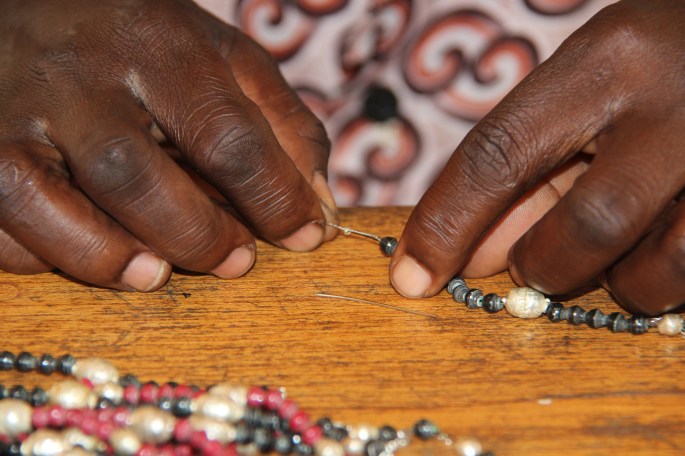
Saying yes to the river for Hibbard meant heeding the call to begin a heartfelt journey with BeadforLife- a global NGO whose mission is providing sustainable opportunities for women to lift their families from poverty by creating a circle of exchange that enriches everyone.    Women in Uganda create beautifully hand-crafted paper beaded jewelry and engaged volunteers and advocates create markets for the sale of their goods.  Proceeds are directly reinvested into program expansion initiatives.

IMG_4908
Beifa Nighty, places finishing touches on the Radiance Collection Necklace.                                By: http://www.standinlove.org

In 2004, Devin,  Torkin Wakefield-Devin’s mother and former peace corps volunteer-and Ginny Jordan, said yes to the river that is now known as BeadforLife.  What started 12 years ago as an intention-setting meditation has grown into an active,  global movement placing entrepreneurial training directly into the hands of the world’s most impoverished women. The scale and depth of this work is unprecedented as evidenced by the recent expansion into six African nations outside Uganda including Burundi, Rwanda, and Kenya.  This hands-on, mobile classroom approach, aptly dubbed the Street Business School, provides tailored business training through a successful network of implementing partners. Devin’s ambition and belief underlie her goal of reaching one million women by 2027.

Challenges

Saying yes to the river does not come without challenges as Hibbard points out.  “We are and continue to be a learning organization”, she shared when asked how an entrepreneur without formal “business” training has achieved this level of success in her organization.  She added,  “We felt like this was something the world wanted us to do…and athough we didn’t have the right CVs to pull it off, we said ‘who are we to say no to the universe when it is giving us something’.”

Hibbard combines a passion for social entrepreneurship and international development with a network of engaged supporters,  worldwide donors, and a team of devoted colleagues working in Kampala, Uganda, and Boulder, Colorado, the nonprofits’ U.S. location.

Devin is not the only one who says yes to the river, exercising courage and plunging feet first into the deep, often unknown future.  The Street Business School encourages its participants to say yes to the river– the river of fresh opportunities where chances at renewed life replace the familiarity of poverty, dependence, and social exclusion.  The members of Street Business School, often rural subsistence farmers living on $0.60 a day, are challenged to trust not only the program’s leadership and it’s initiatives, but also- themselves.

Belief

Saying yes to the river for a vast majority of BeadforLife members means learning to read and write, and courageously stepping into a mobile classroom environment joined by neighbors and strangers from familiar socio-economic backgrounds as well as women who have successfully transitioned from poverty to economic independence.  The program graduates serve as mentors while lending credibility to the program’s effectiveness.

BeadforLife resembles a braided river,  whose multiple channels connect flowing streams of believing, compassionate individuals.  The river’s source- LOVE.

jennife-r6-010-3a
Ariel view of New Zealand’s braided Dart river located in picturesque Glenorchy.                   By: http://www.standinlove.org

When was the last time you thought about saying yes to the river?

Farewell Fare-thee-well

It is a gorgeous morning, clouds full of pre-purge precipitation in the desert sky as fresh fallen snow tops the higher reaches of the Red Rock mountain range standing mightily in the distance.  As we  prepare our hearts and minds to say goodbye to 2016, let us be encouraged by the joy that is found in farewells.

While enjoying my routine, mind-clearing, morning jog I was filled with excitement about the close of another year.  Today is like the joy of reading the final page of a book you’ve struggled so hard to finish.  Some chapters harder to read than others, but you pushed on, and made it to the end.  Well done.  With the next fresh book patiently beckoning, you muscle through anticipating that wonderful sense of accomplishment .

I am inspired to share with you a few things to consider as you cross the threshold into the new space that is 2017.  I believe these may soothe sore spots in your life, and provide an opportunity to create space for abundance.

Reflection

In an article entitled “Clear Your Clutter” featured on Martha Stewart.com, the author gives wise advice about making room in your life to receive what you desire.  She says “that space is a reflection of what’s inside”.  So simple and profound as we take a look around us at all of the spaces we inhabit.  Beginning with our bodies, what do our physical bodies say about what’s inside of us?  Move out gently to our immediate surroundings, and notice the spaces you frequent most often.  What do those spaces say about how you are feeling and what you are experiencing in life.  Do they line up with how you want to feel?  We can take a look at our work spaces, our relational spaces, even our mental spaces.  What is taking up space, using our energy, and do these things help us or hurt us?  Can you pause long enough to simply think about an area in your life that you would like to improve?  Do you long to make more time to read books you love?  Are you curious about making a special meal that requires an organized kitchen pantry?  Have you ever considered writing that book or taking that photography class, or maybe signing up for a session of Reiki you’ve always wanted to try?  What’s in the way preventing these thoughts from becoming realities?

According to the article referenced above, ask yourself the following question:  ” If eliminating things from my life would make space for something new, more important, what would I want? ”   This is a great starting point, because without a vision of what you would like to do or see in your life, you will likely remain stuck in the clutter.  We must decide that our stay in the land of in-between is up.

Decision Making

Best-selling author Tony Robbins opens his  500 page book  Awakening the Giant Within with a reminder of the power of decision-making.  Strength born from taking action.  Indecision is paralyzing, and when you become empowered by making small decisions more frequently, you set yourself up for confronting bigger decisions.  Most of the things we truly want in life are available to us, we just have to decide we want them.   Decide we will take action by implementing a plan that will guide us along the way.

Decide what you would like to get rid of in your life in order to make space for the things you deeply desire.   Do you need to get rid of self-imposed expectations weighing you down?  Maybe now is the time to purge yourself of hopelessness, bitterness, and powerlessness.   Decide and do it.   It is your choice.    Is this the time to donate your unloved material possessions to a favorite charity you have always wanted to support?  Decide to let go of those items.  Ask yourself, “Do I love them? Do I need them?” If the answer is not a resounding YES!, give them up.  You are practicing decision-making, and you are blessing someone in greater need who will benefit from your release.

Clearing Space

Tina Turner once said, “Sometimes you have to let everything go …purge yourself.  If you are unhappy with anything, whatever is bringing you down, get rid of it. You will find that when you are free, your true creativity, your true self comes out.”

Purging, de-cluttering, sorting, organizing, are forms of therapy.  Give yourself the gift of making space for the things you would like to attract and enjoy in your life.  In order to invite those things into your life, you must make room for them.   How do you want to feel in these new spaces?  Inspired? Productive? Intimate?  Creative? If the space is full of things that contradict its intention, take action:   Reflect, Decide, and Remove it!

C. S. Lewis leaves us with these wonderful words to consider on this final day of 2016:

” There are far, far better things ahead than any we leave behind. “

Stand in Love,  Jen xxx

To Those Who Grieve


“Part of every misery is, so to speak, the misery’s shadow or reflection: the fact that you don’t merely suffer but have to keep on thinking about the fact that you suffer. I not only live each endless day in grief, but live each day thinking about living each day in grief.      – C. S. Lewis

Whether it was Brene Brown’s well-researched discourse in her latest book Rising Strong, Mikki Wade’s thought-provoking insights during a recent Transformation Cafe podcast, or the courageous and contemplative journey of the Petit Prince, St. Exupery’s imaginary protagonist in the novel of the same title,  the subject of grief and how to navigate its winding path have been the source of incessant mental chatter over the past several days.

What do these three seemingly unconnected conversations share, and why do I feel compelled to share them with you? 

After contemplating the subject for hours on long early morning desert hikes,  I have come to the realization and appreciation that we all experience grief in one form or another, and with that comes the tendency to avoid it and the discomfort it brings.   Tony Robbins writes in  Awakening the Giant,  “people will go to further lengths to avoid pain in their life than to have pleasure”, pointing out our natural preference to avoid, deny, and bury grief right alongside the other uncomfortable emotions we would rather not feel.   I would like for us to peel the cover off grief, expose it, get used to it, and let it cultivate room for deeper love.  We can do this together.   You are not alone in your grief.

Exposing Grief

The holidays are breeding grounds for grief encounters, and according to Grief Recovery Method expert Mikki Wade, grief is a normal reaction to loss. Grief is experienced when loved ones move away, kids grow up, companions pass, and youth disappears taking health, vitality, and ambition with it. Grief is the loss of a career, an opportunity, or strength in deteriorating muscles. Grief resides in the ends of  relationships and is reborn in new ones.  We may grieve a new home, a new school, even a new leader.   Grief dwells in old memories, experiences shared with friends, even in thoughts we project in the future.  We grieve intangible things like poverty, world hunger, social injustice, as well as the rich feelings once entertained about love during our adolescence.  Grief’s messiness leads to its avoidance, yet its familiarity functions as a bridge connecting us through a shared sense of humanity.

We have permission to grieve and the process of grieving is completely normal and natural.  What a relief to know we can grieve, and that it is a process.   We can give ourselves the gift of grieving.  In other words, we don’t have to condemn ourselves for feeling grief.  Grief is not a common cold quickly remedied with a cup of chicken noodle soup and a couple of days in bed.  It is a process.

Last night while watching an episode of The Crown, a young Queen Elizabeth sat opposite  Edward VIII,  her uncle who abdicated the throne the same year of his coronation forcing Elizabeth’s father, George VI, into succession of the throne.  The scene takes place after King George VI’s untimely death making Elizabeth, the heir-apparent,  Queen of England at age 27.  When she asked him for an apology, he replied, “for what?”  Elizabeth courageously replies,  “for taking away any sense of normalcy in my life and for removing from me the ability to be a countryside mother and wife.” The young Queen Elizabeth grieved not only the loss of her father, but also the inevitable loss of a privacy now faced with royal responsibilities.


Getting Acquainted With Grief

A dear friend and mentor, Amy Lynn Frost, MBA and MA Spiritual Psychology, published a series of articles on what she refers to as  The Shadow Self.   She encourages us to invite our shadow-selves, described as “the storehouse of our physical and emotional losses, repressed dreams and intense experiences of all kinds” to dance with us.  By inviting these dark, secret, unpleasant, and difficult sides of ourselves to dance, we acknowledge them as partners which help make us a whole human being.

“People who genuinely love themselves have fear and dislike parts of themselves too. They have become self-loving because they have the courage to become acquainted with their shadow-self. After you work with the shadow and integrate it into your “whole self” you realize it’s not bad or evil, it’s just a part of you needing a voice.  The shadow has valuable lessons for us.  We must take the time to listen. ” – Amy Frost

Could simply identifying our own grief help us live more fully?  What if instead of burying the dark, hurting parts of ourselves, we joined hands with them and brought them into the light?  What if by waltzing with our grief, we were able to discover that which we long for?

“Longing is a vital and important part of grief, yet many of us feel we need to keep our longings to ourselves for fear we will be misunderstood, perceived as engaging in magical or unrealistic thinking, or lacking in fortitude and resilience.”- Brene Brown

Loving is Grieving

It is common for me to grieve time spent abroad longing for deep cultural connections with strangers, the chance to converse in foreign languages, and the rich shifts in perspective that occur upon returning.  I decided to satisfy this grieving by re-reading Le Petit Prince in French, dictionary by my side.   We traveled vicariously together from planet to planet in search of answers to life’s toughest questions.  He discovered he grieved his precious rose all along.  His grief caused an internal awakening, rendering him grateful for his love for her.  To love is to grieve, and to grieve is to love.

It was Queen Elizabeth II who said, “Grief is the price we pay for love”.

Thank you Mikki Wade, Brene Brown, and Amy Frost for your courage to explore this subject and share your research with us so we don’t feel alone.


Ragnarian Rapport Floods the Mohave Desert

What’s the best way to get to know someone?

Endure 24-36  hours temporarily crammed in a passenger van with 5 others, run 3-11 miles on adrenaline, sleep-maybe- and repeat twice.

What brings together road and trail warriors, often complete strangers, in one of the toughest overnight challenges offered in 19 of the most scenic locations across the United States?

Reebok’s Ragnar Relay.   A veritable test of endurance, collaboration, and will.

And what, pray tell, are the motivating factors that stir the hearts and soles of these participants known in Ragnar lingo as Ragnarians?  After spending an enthusiastic 3 days following teams PimpMyStride and SupaFupaTroopers, it was abundantly clear: Camaraderie, Challenge, and Conviction. 

I had heard of the wildly decorated team vans, the clanging of cheering cowbells, the colors of warrior-like painted faces, and the creativity of costumed runners, but admit I never explored the relational depths of such an undertaking.   A Ragnar Relay team consists of 12 runners divided into 2 vans with approximately 200 miles to cover in the span of 2 days and 1 night.  Each runner completes 3 of the 36 varying course segments accumulating a minimum of 12-13 miles.    6 people and 1 van is considered an ultra team, with each runner performing double duty and 26+ miles.   Intrigued by challenges involving endurance and mental fortitude, I decided to venture into the welcoming community of Ragnarians.  Thanks to a volunteer opportunity with the local police department and a gracious invitation on social media, I was afforded an insider’s glimpse.

Camraderie

Eager to share the Ragnar experience from the runner’s perspective, I met team captain and repeat Ragnarian Annie Pham of San Diego at her team’s strategic location, a rented Vegas mansion, for some pre-race interviews Thursday night.   Together with team Unsupervised Adults, we lounged on the back patio, under the glowing light of a low-hanging desert moon as teammates proffered their resolves for accepting this rigorous endeavor.   Christy, Kelly, and Claire expressed their appreciation of fostering new friendships within this united tribe of spirited adventurers.  “Running is usually a solo sport, ” said 13 time marathoner Claire, “but Ragnar gives you the opportunity to share your love of running in community.”  “It’s the togetherness, the friendships that form, the bonding that happens during an event like this that keeps me coming back, ” shared Kelly. “I’m a first timer,” said Christy, “and I am glad Kelly invited me for this amazing challenge .”  Annie’s impact as team leader was self-evident.  The meticulously planned and printed running time tables, scheduled wake-up calls, and the abundantly stocked kitchen mere hints of her exceptional leadership abilities.

Challenge

“I decided that before my 55th birthday in March of 2017, I would run a 1/2 marathon and compete in a Ragnar Relay,” said team member Rowan, a Dosimetrist from CA when I asked him why he chose to accept the call to run.   Rowan graciously admitted his status as a novice runner, highlighting his commitments to stay in shape and connect with others in a satisfying team environment.

Over 350 teams took the Ragnar Relay challenge in Vegas this year including groups from Central Christian Church, Hakkasan Group, and a local high school team from Henderson called the Coronado Sole Runners.   Some teams combined challenge with philanthropy, opting to add a fundraising component for their favorite charities.

In addition to the inherent course challenges (uphill climbs, knee-stressing descents,  fatigue, fear, and inescapable desert sun) was the relational challenge.   An interruption of all things comfortable:  space, sleeping arrangements, and status quo.  Teams carried the task of motivating each other, lifting spirits, and continuing to encourage weary and worn-out minds and legs that yes, they could finish the race set out before them.  They had to believe, even when the pain and struggles seemed impossible to overcome.

Conviction

Enter team 1: SupaFupaTroopers.   I met van 1 of team 1 at Exchange 3 of 36 in the middle of Lee Canyon Road, approximately 12 miles downhill from Mt. Charleston Snowboard and Ski Resort,  just off US95.   It was the first runner witnessed at our exchange that afternoon.  I grabbed my brass bell, dashed into the street cheering with ebullient enthusiasm as teammates Mark and Mark exchanged the slap bracelet– the Ragnar version of a relay baton.  Ranging in age from 17-41, this team not only lucked out getting their team number to be 1, they actually finished in first place!   Mark Bennett, a collegiate runner for Southern Utah University and 15:06 5k runner took the relay’s longest leg, an 11.1 mile run through the desert’s Joshua trees and thorn bushes on a trail of rocky gravel, the last 5 miles of which he said were an uphill battle .

I learned at the finish line late Saturday morning talking with the wife of one runner, that the team set a specific goal of finishing in under 24 hours.   As seasoned participants, this team held fast to the belief that they could and would accomplish this quest.   Together, they did.

Better Together

As a relational and community bonding event, Ragnar Relay rallies dreamers and conquerors to bring their best selves to a team to accomplish the goal.   With social media tags like #bettertogether, #innerWild, # chasethesun,  and #chasethemoon, it was clear that this experience had implications reaching far beyond the scope of running.  Thank you Ragnarians for sharing your culture and inspiring the notion that everything is achievable when you are in it together.    The impossible becomes possible, the unrealized turns to reality through the power and strength of togetherness.


Foundations of Friendship

Today, I had the honor of experiencing first hand the great work and services offered at the Veterans Transition Resource Center (VTRC), a nonprofit collaborative partnership between Life After Active Duty and Veterans Care Foundation, created to help fill the gap in Veteran Services in Las Vegas.

Our Mission ~ To be a beacon, for our Military, Veterans and their families around the world, to help navigate the challenging obstacles from military life back to civilian life.

At the invitation of a friend, I accepted an opportunity to hear insights from friendship expert, Shasta Nelson, author, speaker, and founder of Girlfriendcircles.com.  Shasta shared years of research on the subject of friendships and the impacts on our health, stating ” We are experiencing an epidemic of unacknowledged loneliness.  More than anything, people desire to feel loved and supported.   Research shows that disconnection is the health equivalent of smoking 15 cigarettes a day, even likened to the devastating effects suffered by those with addictions like alcohol.”  Point: loneliness, disconnection, and lack of a support network takes a toll on your mental and physical well-being.

This subject effects each and every one of us, not just veterans. Everyone needs friendships and support networks. What I appreciated most from her interactive talk with the group today, many of whom lost loved ones in active duty or are current care takers for loved ones, is that before we can learn how to be supported we must first understand what it means to be a friend.  Guys, this goes for you as well.

Three Components of Friendship

Friendship, she defined as:

Any relationship where two people feel satisfied, safe, and both people feel seen.

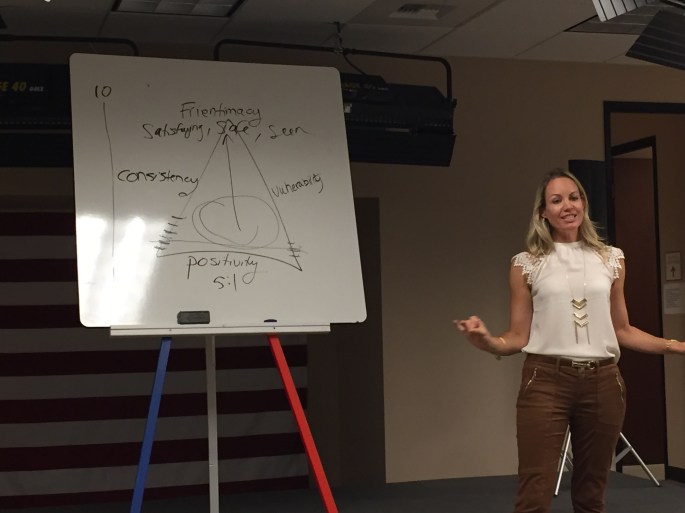
Shasta then drew a triangle on the white board in front of the group and shared the three most important components, requirements rather, for solid friendships to occur.

1. Positivity.

According to Shasta and her research, we should have a ratio of 5:1 for positive to negative interactions.    To be a good friend means sharing positively, impacting relationships in a healthy way.  This doesn’t mean we can’t share hurts and hangups in our lives with our friends, rather, it’s an opportunity for us to share where we are at to be truthful with our current situation and then offer something like, “I’m going through a rough time right now with work/ spouse/ (fill in the blank), but I’m so excited to be out meeting new people and building new friendships!”  Everyone likes to be around positive energy.

2. Consistency

We all know how hard it is to keep up with friends who live in different states, have different schedules, lifestyles, etc, but the key is connecting with regularity.  Even if it’s micro movements like calling each other at a set time each week or couple of weeks, or sending texts periodically, it’s keeping the contact consistent.   Shasta revealed that this is key for friendships, because consistency helps build trust between friends.  Helps instill the “safety” factor in the relationship.

She pointed out very keenly that this process of meeting people regularly happened as children when we were in school, and happens daily in the workplace.  There is a structure to the relationships, helping people bond more easily.  Things like deployments, church groups, university settings, and volunteerism place people in routines with consistent patterns, and naturally lead into the development of friendships.

3. Vulnerability

This is the component of friendship that Shasta says “makes us feel seen”.   Being vulnerable doesn’t necessarily mean we have to “vomit our vulnerability on new friends, rather, our level of vulnerability should increase incrementally with our consistency with that friend”.  As we see them more often and the friendship grows, we are able to increase our capacity to be vulnerable with them.

Vulnerability, according to Shasta, isn’t just sharing the hurting parts of our life, but can be translated as “initiating”.  When we ask someone to connect with us for a coffee, walk, or get together, we fear rejection and the very act of asking is being vulnerable.  It’s ok.  And it’s ok if we get a “no”.  That doesn’t mean we should feel rejected.

Self Assessment

At the conclusion of the session, Shasta challenged us to consider our friendships.  On a scale of 1-10, how supported do we feel in our friendships?  Are we putting too many expectations on the relationship and pushing that person away from us rather than drawing near?  What is missing in our friendships, and how can we improve ourselves to be better friends to someone else?

If positivity, consistency, and vulnerability are the three key ingredients to developing healthy friendships, what could I increase to improve the quality of my friendships?

My favorite takeaway was undoubtedly the following remark I believe hit home for every person in the audience.

Show up in beauty and light.

It’s not about finding the right person to be your friend, but fostering the right relationships you have.

Thank you Shasta Nelson for sharing your passion for friendships and connection with us today in the room.   Your heart emanates light and love.  I know I am not the only one who felt a connection with you.

To learn more about Shasta Nelson’s work, check out her published books on the subjects of friendship and connection.

What one word comes to your mind when you think of friendship?

Stand In Love,
Jennifer